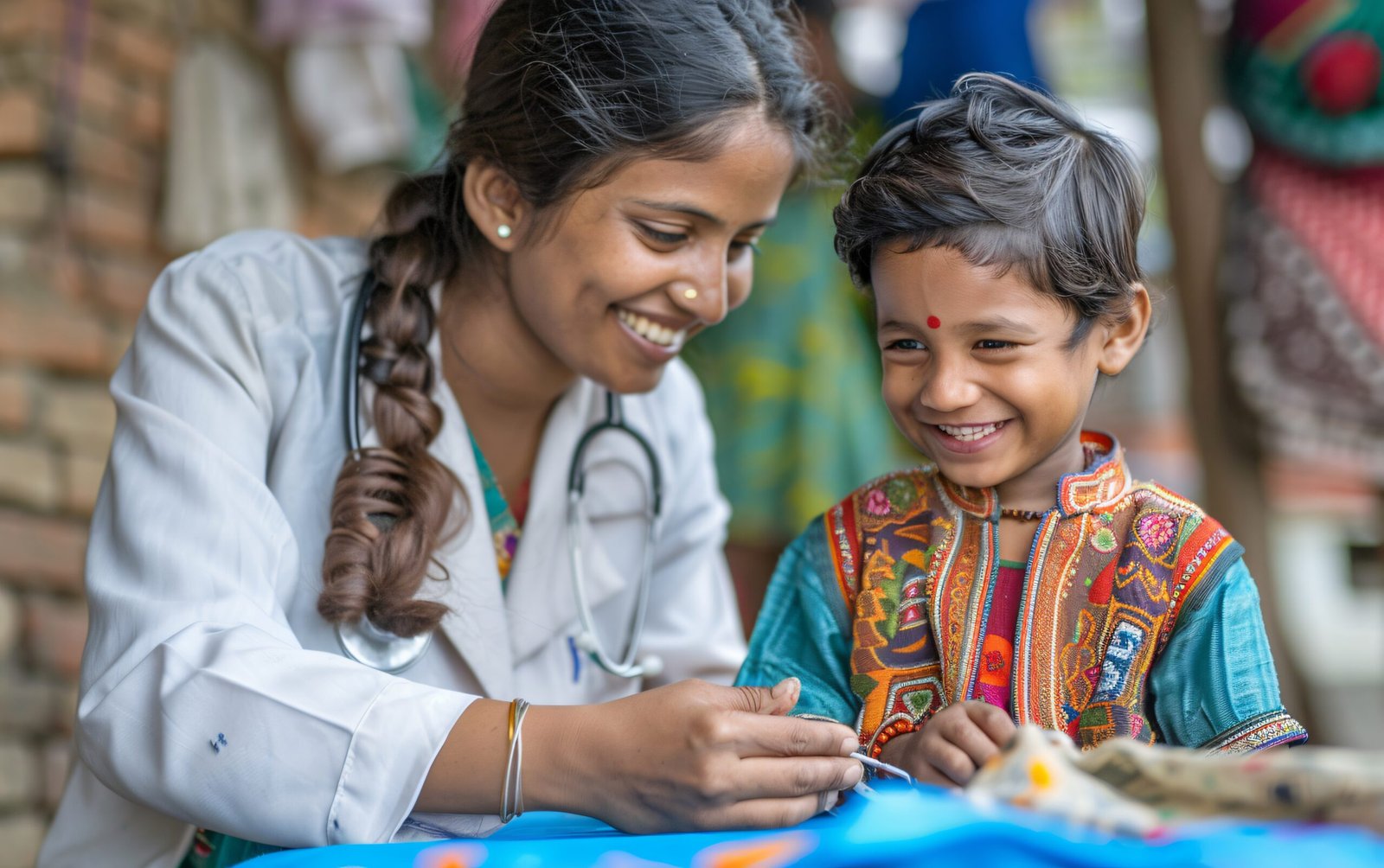
Community development is not only about providing short-term assistance. Real change takes time. It often begins with something as simple as helping a child attend school, making basic healthcare accessible, teaching a practical skill, or giving a woman the confidence and support to become financially independent.
This is the approach followed by Shanti Sahyog, an organisation working with underprivileged communities in South Delhi and Tughlakabad Village, New Delhi. Since 2004, the organisation has focused on areas including education, healthcare, skill development, women empowerment, elderly care and peace and conflict resolution.
Building Opportunities Through Education
For children growing up in economically disadvantaged communities, education can open doors that may otherwise remain closed. But getting a child into school is often only the beginning. Regular attendance, learning support, transportation, school materials and encouragement from family and community all play a role.
Shanti Sahyog works with children from 17 South Delhi slums and Tughlakabad Village through preschool, primary and secondary education initiatives. Its education programme also includes remedial support, non-formal education and adult education.
Its play and preschools provide young children with a structured environment before they enter formal schooling. Activities such as drawing, music, games, crafts and basic language and mathematics help children develop confidence alongside academic skills.
For older students, the organisation supports primary and secondary education and provides additional learning assistance. This kind of continued support matters because children from disadvantaged backgrounds can face difficulties long after their first day at school.
Education for Adults Matters Too
Education is not limited to children.
Many women in underprivileged communities may have had to leave school at an early age or never had the opportunity to attend school at all. Basic literacy can make everyday tasks easier and can also help people become more confident when dealing with financial, health or administrative matters.
Shanti Sahyog runs adult education initiatives for women and encourages learners to pursue formal education through programmes such as IGNOU and NIOS.
This is an important part of sustainable development because education can continue to benefit a person long after a particular programme has ended.
Making Healthcare Easier to Access
For families living with limited financial resources, even a basic medical consultation can sometimes become difficult to arrange.
Shanti Sahyog has developed healthcare initiatives that focus on accessible treatment, preventive awareness and health camps. Its healthcare work includes a health centre in Kalkaji, dental camps and collaborations with hospitals, clinics and doctors.
The organisation’s health centre was established in 2007 and serves residents from Sudhar Camp and neighbouring slum communities in the Kalkaji/Govindpuri area. Its healthcare activities have also included eye, dental and cancer screening camps.
The broader lesson is that community healthcare is not only about treating illness. Awareness, early screening and access to basic medical advice can also help people make better decisions about their health.
Turning Skills Into Livelihood Opportunities
Education can improve knowledge, but practical skills can help people earn a living.
Shanti Sahyog operates skill development centres in Kalkaji and Tughlakabad Village. Its programmes include areas such as computer applications, cutting and tailoring and beauty culture, with the wider aim of improving employability and economic independence.
This approach is particularly valuable for people who may not have access to higher education or formal professional training.
A person who learns computer skills, tailoring or another practical trade can potentially use that knowledge to seek employment or start a small income-generating activity. The organisation also gives special attention to school dropouts and adults who need opportunities to build practical skills.
Supporting Women Beyond Vocational Training
Women’s empowerment requires more than employment training.
Women facing domestic violence, financial insecurity or social restrictions may need counselling, legal awareness and emotional support before they can move towards independence.
Shanti Sahyog’s women empowerment work combines vocational training with legal awareness, counselling and support for victims of domestic violence. The organisation also promotes Self-Help Groups and encourages women to explore micro-enterprises and entrepreneurship.
Training in computer applications, beauty culture and cutting and tailoring can therefore become part of a larger support system rather than being treated as an isolated course.
That broader approach can help women build skills while also strengthening confidence, decision-making and community connections.
Community Development Needs Local Participation
One reason grassroots organisations can have a meaningful role is their close connection with the communities they serve.
Community development cannot be imposed from outside. Local people understand their own challenges, priorities and limitations. Working closely with residents can make it easier to identify practical problems and develop solutions that are realistic for the community.
Shanti Sahyog’s work is supported by social workers, teachers, mobilizers, healthcare professionals and skill instructors working across its different programmes.
This local involvement helps connect education, healthcare, livelihood support and women’s empowerment rather than treating each issue as completely separate.
A Focus on Sustainable Change
Sustainable development is often misunderstood as simply doing something that lasts for a long time. In community work, it also means helping people develop the ability to move forward independently.
For example, sponsoring a child’s education can help that child continue through school. Teaching a practical skill can create an opportunity for employment or self-employment. Adult education can improve confidence and independence. Women’s Self-Help Groups can create stronger financial and social networks.
These individual steps may appear small, but together they can influence families and communities.
Shanti Sahyog describes its mission as helping individuals and communities break the cycle of poverty that prevents them from reaching their potential. Its work is also influenced by Gandhian values of truth, nonviolence and service.
The Importance of Working Together
Community organisations cannot create lasting change alone.
Schools, healthcare professionals, companies, government agencies, volunteers, donors and local residents can all contribute in different ways. Shanti Sahyog’s supporter network includes corporate, government and individual partners who have supported projects related to education, healthcare, women’s empowerment and skill development.
Even small contributions can have a practical impact when they are directed towards well-established community programmes.
For people who want to contribute, the organisation provides options that include supporting children’s education, vocational training, mid-day meals and general community welfare programmes.
Why Community-Based Development Matters
Poverty rarely comes from a single problem.
A child may struggle at school because the family cannot afford educational expenses. A parent may struggle to earn because they lack vocational skills. A woman may be unable to become financially independent because she has limited education or faces domestic difficulties. Poor access to healthcare can add another burden to the household.
This is why a connected approach can be more effective.
Education can improve future opportunities. Healthcare can protect well-being. Skills can support livelihoods. Women’s empowerment can strengthen families. Community participation can help people become more confident in solving local problems.
The different areas of work supported by Shanti Sahyog reflect this wider understanding of community development.
Final Thought
Sustainable community development is built through consistent effort rather than one-time solutions. A school lesson, a health consultation, a vocational course or a women’s support group may seem like a small intervention on its own, but these opportunities can become meaningful turning points in people’s lives.
Shanti Sahyog has spent years working at the grassroots level, bringing education, healthcare, skills and empowerment programmes closer to communities that need them. Its work shows that meaningful social change is often created step by step — by giving people access to opportunities, supporting their choices and helping them build a more secure future for themselves and their families.


